
Tara Vaughan — city staff liaison. Will you guys make sure to hit those mics?
Alyson Chapin, North Central. Lisa France, Redondo. Corrine Anderson Ketchmark, human services. At large. At large. Victoria Andrews, at large. Diane Hoyer, at large. Richard, at large. Bill Linscott, Marina Tenants. Mackenzie Meyers, business. Charlene Balcazo, business. Jeff Crompe, at large. Eddy Duggar, Central. Aileen Evans, at large. Your deputy mayor, Robyn Desimone, council member. Harry Steinmetz, council member and chair.
I heard from two people that they would not be here — Susan White and Marielle. And Larrett. Thank you. They both had a good reason. Do we have a motion to excuse?
[4:04] UNIDENTIFIED: So moved. [4:09] HARRY STEINMETZ: Is there a second? All right. They’re excused. All in favor. And we’re off to a rolling start.Item one on the agenda is approval of the minutes. Everybody have a chance to read them? Is there a motion?
[4:29] UNIDENTIFIED: I move to approve the minutes from last month. [4:31] UNIDENTIFIED: I second. [4:32] HARRY STEINMETZ: It’s been moved and seconded. Any discussion? Is anybody opposed? Passes unanimously.The second item on the agenda — and our star for the evening — is the assistant city manager, AJ Johnson Newton, who will tell us all about the city-sponsored events coming up in the next year.
—
[5:00] AJ JOHNSON NEWTON: Hello everybody. My name is AJ Johnson Newton. A little quick background: I’ve been at the city since 2018 — redundant for you, I know. I was originally hired as the HR director and then moved into the assistant city manager role in 2023. Part of my responsibilities include management of HR, information technology, and community enrichment services, which is why I’m here tonight — we want to talk about some changes we’re doing with our city-sponsored events. Hold your applause until after the presentation.Tonight’s presentation is specifically focused on city-sponsored events. One thing I want to highlight is that we’re distinguishing between signature events and community events. That’s language we just developed so we could be intentional about what we mean. Signature events are designed for our residents and to draw visitors into De Moines. Think of the Egg Extravaganza, or when we used to do trunk-or-treat — that’s really for residents. But the Fourth of July with the drones — given the lack of other cities putting on those presentations — we hope that not only satisfies our residents but actually brings people into De Moines. Big-scale, signature events.
As I go through the presentation, I’ll give you a little background on what’s been going on in community enrichment services, for those who may not have heard my presentation in October. Then I’ll talk specifically about the Fourth of July and the holiday tree lighting. This is meant to be interactive — there are places where I want to get feedback from you.
Before I get started: Courtney over there — wave your hand, Courtney — is our community enrichment program supervisor and she does the bulk of the planning for events. I don’t do the hard work. She’ll be here taking notes as we start to refine the scope of our events.
[7:30] AJ JOHNSON NEWTON: A little about what’s been happening in community enrichment services. If you’ve been in the city a while, the department used to be called parks and recreation, senior services, events and facility rentals — a very long title. Even though that was historically one area, services like events and facility rentals moved down to the marina. So there was a split in terms of where they were located. The departments were still functioning as one unified department, but the services were running parallel. Senior services focused on seniors. Parks and rec was for families and younger people. Events and facility rentals did their own thing.Then COVID hit. Just before COVID, a big chunk of our parks and rec operations was school-based childcare. The YMCA went into the schools, we stopped doing that work — we still have summer camps and after-school, but not on-site the way we used to be. That impacted our structure. Then COVID hit and this department was not allowed to host events or programming. We were pretty much shut down for about two years. During that time, people started figuring out other things for their recreation. By the time we started gearing back up, some people had just moved on.
[9:19] AJ JOHNSON NEWTON: Post-COVID, we recognized we had a changing market and needed to be more proactive. The activity center’s management had been subcontracted to Wesley during that period — we brought that back in-house. Events and facility rentals was down at the marina — we brought all programming activities back under one umbrella, because we wanted stability and recognized that programming and recreation is programming and recreation, regardless of who you’re doing it for.We adopted the name community enrichment services, which describes what we do much better than the old title. The other main shift since I came on board is being intentional about shaping our activities with data. We started surveying other municipalities — what do you do, how do you staff, what do you charge — really going beyond just creating programming to understanding the operational piece and making sure we’re responsible stewards of our resources. And then we asked residents: what do you want?
Around August-September last year, we did a community survey. I was pretty proud of the 334 responses — until I saw how you guys kicked our butt on the other survey. But 334 is still not bad. Top age groups: 65 and older and 35 to 64. Languages in the community other than English: Spanish, Tagalog, and Russian. Thirty percent of respondents included children, and 12% reported a disability. The neighborhoods with the most responses: Central, Zenith, and North Hill.
The main takeaway: 62% said the way they interact most with community enrichment services is through city events. And just shy of 70% said they were satisfied overall, while 83% said that if they’d been to an event, it was a positive experience.
[13:00] UNIDENTIFIED: I can’t… the Camp Khaos number — is that reflective of just summer camp or the after-school program? [13:09] AJ JOHNSON NEWTON: I’d have to look at the actual question. I think we said summer camp, after-school care. Camp Khaos is kind of the overarching name. After-school right now is not as large as it used to be, but Camp Khaos summer camp and our break camps are pretty popular.If you guys have questions during, just let me know and I’ll pause.
Our takeaway from the survey: the primary way residents interact with community enrichment services is through events, and residents see that as a way to build community connection. So why am I here tonight?
[14:00] AJ JOHNSON NEWTON: We did a presentation for council on February 5th. Based on the community survey feedback — “we want more events, more opportunities to connect with neighbors, do more in that area” — even though the timing was tight, we thought it was important that if we asked the community to give feedback, we try to be responsive in a timely manner rather than waiting until 2027.We went to council and said: here’s what we’re hearing. People want more events. We have a huge event — the Fourth of July — that has a high ticket price and requires a lot of staff facilitation. Do you want us to continue focusing energy there, or would you like us to scale that back and try to build more events at the signature-event level?
[15:34] AJ JOHNSON NEWTON: Here’s why we specifically highlighted the Fourth of July. The 2025 celebration: the city owned all the logistics. We hire third-party vendors, but we had no partnerships on this event. Total cost: $123,075 — there’s some estimation in there. We think about 2,000 people attended, roughly. Simple math: $123,075 divided by 2,000 equals about $61.50 per person. The question we were posing to council: we think we could do more with that than spending $61 per person for 2,000 people.One quick thing about how we fund the Fourth of July: there’s a thing called lodging tax. When you stay at a hotel or motel, a portion that the city can collect is designed specifically for tourism. It’s a separate fund — not the general fund. The bulk of what we spend on the Fourth of July comes from lodging tax. So if we’re looking at moving some funding into other events, we have to consider the regional-draw piece, because that’s how we access these dollars without putting pressure on the general fund.
[17:20] BILL LINSCOTT: AJ, that $123,000 from the lodging tax — is that an average or do you see it climbing? Also, I believe attendance at this year’s Fourth of July was radically less than normal. I attribute that to the drones, but who knows. [17:51] AJ JOHNSON NEWTON: Regarding the lodging tax — if you’re really interested in this, I’m slotted on the council presentation on March 26th to do a deep dive. King County did reduce the amount we can collect under the lodging tax, so at some point we’re expecting a reduction in collections. And I think you’re probably right about attendance — we haven’t historically been able to count how many people come. The 2,000 is anecdotal; it felt about right based on the event planners’ experience, going from larger events with fireworks to where we’ve ended up with drones. [18:45] UNIDENTIFIED: Do you think we’ll benefit from FIFA? King County will see an increase in tourism this summer, and that should help our bottom line. [19:06] AJ JOHNSON NEWTON: I don’t want to guess because I’m not involved in FIFA planning, but I know there are conversations happening on the city side about how we can capitalize on that. [19:18] UNIDENTIFIED: Can you remind us what’s been included with the Fourth of July the past couple of years, other than the drone show? [19:25] UNIDENTIFIED: Drone show, food trucks, an alcohol vendor, bands, entertainment, a magician… [19:52] HARRY STEINMETZ: I did want to touch on FIFA for a moment. Katherine and I went to a Seattle Sports Commission seminar on Tuesday and learned a lot. Almost a year ago, the city applied to get FIFA viewing rights — to be able to show the games — and I believe we were selected. We will be showing the games here in De Moines. Other cities will as well — I believe Renton, Tukwila — but we will be a public viewing space for FIFA games. More information to come, but it will be hundreds of thousands of people coming to the area. They come for a fair amount of time; they want to bounce around and see what’s going on. De Moines will try to do as much as we can to attract travelers and collect as much of their spending as possible. FIFA is being addressed and we will be able to participate. We’re hoping they all stay at the Four Points. [21:10] UNIDENTIFIED: What else is considered a signature event as far as the city’s concerned? [21:16] AJ JOHNSON NEWTON: Right now it’s the Fourth of July. What we talked about with council is looking at the holiday tree lighting as the next logical event to try to scale up. [21:56] UNIDENTIFIED: Even though it’s not a city event — wouldn’t the Waterland Weekend be considered a signature event based on who it attracts? We’ve got Seafair clowns, we’ve got things coming in from outside. [22:21] AJ JOHNSON NEWTON: Maybe what I should say is “city-sponsored signature event.” I don’t want to speak against other events — you’re right, we do have events that get regional draw — but what we’re really talking about is where the city is the one putting it on. We may or may not have partners. Thank you for asking that so I can clarify. [22:47] UNIDENTIFIED: I had the same question. If it’s being named the Waterland Festival, maybe this year is a little too short to execute, but to bring people in for a festival — that might be a good way to add an extra city event. [23:12] UNIDENTIFIED: I’m curious — since we’re talking about the summer concerts, that is a totally city-sponsored event. I’ve been to some concerts; one I went to in Puyallup had 3,000 people at their last summer concert. If we did some advertising and promotion, we could draw from outside our own citizens. It probably wouldn’t provide lodging, but bars and restaurants would benefit. I wonder why we don’t consider the summer concert series. [23:58] AJ JOHNSON NEWTON: Two things. The language is relatively new — we needed a way to have a conversation with council about how we were viewing events. And remember how it’s being funded: summer concerts are not funded by lodging tax. I’m not saying that’s not a good idea, but for this year we were focused on the funding question and the way lodging tax is designed to be used, which has been for the Fourth of July. Potentially for 2027, we look at summer concerts as a scaled-up signature event — they’re certainly primed for it given the bands. [24:38] AJ JOHNSON NEWTON: After giving council all of this information, the direction they gave us was: discontinue the drone show, but still pursue a Fourth of July event. They want us to transition from the single high-cost event model and move toward multiple signature events. So there is opportunity, probably past this year, to rethink what these signature events are going to be.Here’s the framework we’re operating within: daytime celebration, all ages. It’s America’s 250th birthday, so we’re thinking a birthday theme. No drones. Really trying to focus on music, activities, and vendors. It falls on a Saturday this year, and hopefully we have good weather.
That’s the light framework from the council feedback. Now I want to open it up — you are the ones attending these events, and we’d like your input on how we can scale it up, because other cities will also be hosting events. What can we do to get people into De Moines?
[26:18] ALYSON CHAPIN: I have two things. I recently started a North Central Facebook group to ask people in my immediate community for their opinions on what we should be doing. Several years ago we had kind of a carnival at the waterfront — rides, bouncy houses, a lot for kids to do. People I’ve talked to have fond memories of that. We could charge admission or a fee for rides. The music and food trucks and alcohol is family-friendly, but there’s not a whole lot of draw for young kids. I remember before I even lived in Des Moines — I was in Seattle and drove down for the Fourth of July because of all the rides available for my stepson who was about six. The other thing: is the possibility of even a small fireworks show on the table? [27:53] AJ JOHNSON NEWTON: Right now our direction is daytime and no fireworks. Could that change? If we get different feedback, we’ll pivot. But right now that’s the direction we have. [28:02] UNIDENTIFIED: Just to add — one of the problems with fireworks, other than the environmental impact and pets, is that they now have to be fired off a barge out in the water. That’s a significant increase in cost. [28:26] BILL LINSCOTT: Adding on to Alyson — I’ve been here a while and I do recall the carnivals. It was on the marina floor, easy access. A carnival came into town and lasted quite a few days — maybe an extended weekend. Now you don’t have access to that area anymore. Are there even traveling carnivals out there? And where would the location be? I think of the baseball field at the fieldhouse area as a possibility. There was an arcade, rides, food vendors, all kinds of activity. [29:15] AJ JOHNSON NEWTON: The good thing for you and for me is that Courtney is going to figure out layout once we get a sense of what’s generally of interest. What I’m hearing is something specifically for children, in addition to the more adult-oriented activities. [29:51] VICTORIA ANDREWS: I know there’s usually a classic car show in the summertime. With the Marina Steps staging area kind of cutting off a lot of that space, is there a way that could be incorporated into the birthday party idea? [30:09] AJ JOHNSON NEWTON: We’re going to add that to the list, Victoria. And I wasn’t trying to be flip about the layout — we know we have construction going on, which is why I was trying to preface that we want all the input, while also knowing we’ll have to make some operational decisions based on capacity. So if your idea doesn’t show up, it wasn’t that we didn’t care. [30:38] UNIDENTIFIED: The car parade could go through town. [30:44] DIANE HOYER: What specific features would make this event worth attending? I came across the idea of reenactments — you want to tie it to history and make it unique. A lot of people who are into history do reenactments all over the country. The scouts could get involved. Just an idea — tie it to the history of our country rather than just having things on a stage. It might be very attractive to outsiders and make it a unique event. Not all day, maybe, but that would be your signature thing. [31:48] MACKENZIE MEYERS: I like all of the ideas, especially bringing back the pressure-washer… I don’t think we had that last year. On Saturdays we already have the park run there all the time. I think that would be a fun way to kick things off. Maybe we do a fun color run — it’s not paint, it’s like a colored powder dust, and kids love it. We could do red, white, and blue. That kicks off the fun, then live music and food trucks, and then everyone’s getting festive. Kind of low cost. [32:40] COLLEEN GANTZ: Like where kids decorate their bikes — there are kids’ parades that some neighborhoods have. Trying to tie that in. It’s a birthday party so you don’t want to go too far off theme. The car show is great. And the reenactment idea — you got me thinking about the Boy Scouts. If you’ve ever been to the San Juan Islands at Orcas, at that one hotel, they go out on the dock and do a really formal flag ceremony. The color guard thing. Tuck that away and check it out. [33:32] BILL LINSCOTT: You know, late ’60s is when the Waterland Festival began. A lot of us are remembering these things fondly — but what people don’t remember is the last few times we tried to have the carnival, it got very unsafe. Guns were brought in. You look at what happens at night now compared to 1969 or 1973 — it’s a huge difference. Same thing with the fireworks a few years back. With the fireworks, they had to hire so many police that it was also a very high cost. And when the carnival stopped at Waterland, that was the main reason — it started getting scary at night. Most carnivals won’t close at 9:00 PM because they’re making their money. I’m not even sure how many condos were down there then that are affected now. Sometimes you have to let people know there are other reasons — there’s a real safety issue behind it. [35:12] AJ JOHNSON NEWTON: Knowing that we’re going to do a daytime event — do you have feelings about whether it should be a concentrated program, in and out, or a rolling four-to-five-hour window? Assuming people are going to return home after to finish their Fourth of July celebrations. [35:54] UNIDENTIFIED: I remember that the carnival did become dangerous. But my thought is perhaps we can create just an arcade — the old throwing darts at balloons, the fishing line with prizes. Come up with five, six, ten ideas and create a makeshift arcade at the fieldhouse. That could work. [36:29] HARRY STEINMETZ: I think Eddy has had her hand up for a bit. And Alyson’s idea of bouncy houses — that’s easy to do and easy to get. [36:44] VICTORIA ANDREWS: Birthdays have balloons. How about a water balloon fight? You could have teams that pay an entry fee. That could be at the fieldhouse. And I like the idea of rolling events — come to that in the morning, dry off, then come eat in the afternoon. [37:11] DIANE HOYER: I like that idea. I just think of the environmental issues with the balloons on the grounds… but then you clean up. Also — you have to have birthday cake for this party. [37:35] MACKENZIE MEYERS: From my experience being down at the marina, it’s pretty slow during mid-morning, really only a couple of hours, and then it dies down after about five o’clock. Once the drone show started, that’s when everybody showed up. So honestly it’s really like a four-hour event. [38:07] UNIDENTIFIED: What are you going to do with the farmers market? That’s down there on that Saturday. [38:19] AJ JOHNSON NEWTON: Yes, the farmers market will be down there on that Saturday. We’re considering that as something that will be happening on the same day. We have some time set up to meet with them about logistics. It actually worked out well. [38:44] ROBYN DESIMONE: Council Member Desimone — also an event planner with 30 years’ experience. Many of these ideas sound fantastic. But I’m going to be that safety and liability and insurance policy person. Bouncy houses and water balloons — there are many areas of injury and liability. Those are fantastic ideas, but as a city-sponsored event, we’d need to navigate past those liabilities.I’m also hearing a lot of great ideas — we could come up with a thousand. But I feel it needs to be narrowed down to two or three things that get everyone’s attention for a small amount of time, because everyone has plans on the Fourth. You want to capture their attention for two or three hours — I agree with Mackenzie on that — and then let them go. I’d also like to default to Mackenzie. She’s down there every year. She sees how it goes and it directly affects her business and the farmers market. We have construction. If we could narrow it down to maybe three or four things that cover the gamut of people we’re trying to reach — the bike parade is solid. Normandy Park does it from 10 to noon. If we can find a few solid things that we’re not hurting people with, and focus within that two-to-four-hour time frame, that would be the draw. We go do the really cool thing and then go barbecue with family.
[40:46] AJ JOHNSON NEWTON: You’re correct — we need to do a few things really well. One thing we’ve been thinking about: the drones and fireworks were that big event draw. If we’re doing a daytime event, what’s the replacement? Normally even in a nighttime show, you do all the daytime activities and then the drone show happens and you leave on a high. What could we look at doing in the day that’s very different from what we’d normally do — something people would leave on that high? [41:41] BILL LINSCOTT: I understand the daytime focus and the fact that the marina is going to be a mess. But that night, people are going to migrate to that waterfront — down at Redondo, down at the marina — and they’re going to watch Quartermaster and Rustón. I would urge you to look at a calmer evening event that allows people to mix, mingle, and gather. Maybe the Quarter Deck and Redondo will have the fishing pier there. Just something to keep in mind. [42:30] MACKENZIE MEYERS: Going back to what’s already there — it’s going to be crazy, with the market and the park run. Merging those exciting things, maybe not the water balloon fight. I’ve only seen people mingle when there’s a lot of live music. Unless you have live music from 6 to 7 to 8, they won’t come until the last 30 minutes. So it’s not worth having a food truck there for an hour. [43:42] ALYSON CHAPIN: Bill kind of stole my idea. I know I’m the one who brought up the bouncy houses, but I also don’t want to steal the thunder of the kids festival, which is just two weeks later — so it feels a bit redundant to do both. My main point: we all really enjoyed the New Year’s Eve waterfront celebration — having that whole area to mingle, bring a chair. I’m envisioning barbecue at home and then walking down to the marina where you can view all the fireworks around Puget Sound. Why not capitalize on that? Have people bring chairs down to the pier, to the marina, and have evening food trucks — one of them could even be a cake food truck. [45:07] EDDY DUGGAR: Mine’s very short. The big draw — either a concert or maybe a talent show. America’s Got Talent-style. [45:25] CHARLENE BALCAZO: A talent show would be interesting, but that’s a lot for this year. I just want to say — great ideas. People will come to the water, like Bill suggested, and having something going on in the water, like a sailboat regatta, would be nice. My only reasonable thought for the kids would be the bike parade on 7th Avenue for a short period of time. They can get streamers from local businesses to decorate their bikes. It’s a celebration of the 250th birthday. I think that’s a real easy task for that day. [46:18] UNIDENTIFIED: I do like how Bill worded it — a light, easy evening. You’re not going to get the trouble-makers you’d get if people were there for fireworks. People come down to cuddle in their chairs and watch fireworks happen elsewhere. Good point also that we have a kids festival close to that date. As a parent, the last thing I’d do is go out during the day and then still have to take the kids somewhere else for fireworks. That’s a lot for a parent — you have to stay up and watch the fireworks. [47:20] CHARLENE BALCAZO: The kid parade doesn’t have to be at 2 o’clock — it could be in the morning. They go to the market, then they do the kid parade. Back in my neighborhood I organized one and it was wonderful. We got permits to close our street, there was a kitty parade at 11, then a potluck, and every yard had something going on — croquet, volleyball, a garage band. Ages one to ninety. The kitty parade is really easy to do. [48:16] UNIDENTIFIED: After hearing all these great ideas — do the businesses get involved? Do they contribute? Are they part of this at all? [48:47] AJ JOHNSON NEWTON: Not in recent years. There did used to be a partnership with the fireworks show where the city worked with some nonprofits, but in recent times it’s been primarily city-led. One of the things we talked to council about is being more intentional about building sponsorships and partnerships, especially for an event like this. That would be attractive if the city is really trying to bring people in from outside as well. [49:30] CORRINE ANDERSON KETCHMARK: Robin and I were thinking the same thing. At the last council meeting I reminded everyone that what happens at the marina stays at the marina — and that’s okay. But during the Fourth of July, Main Street is dead. Quiet. Crickets. Nothing. So to be intentional with this event, you need to commit to one area and one area only. It’s not feasible to expect people to bounce around, especially up to Main Street. If we’re going to have a parade on 7th and activities at the marina, that’s not going to create a lasting impression. Have it in one spot, make it amazing, and understand this is just not the moment for the brick-and-mortar businesses. Waterland Parade goes past businesses, but this is not something where businesses are going to be able to participate or benefit from — and that’s okay this time. Bring people into the city, give them a reason to come in, and when they come back is when the businesses get them. Our energy shouldn’t be toward that right now. It should be focused down at the waterfront, for a few hours, with a few key activities. You could do the bike parade right on the marina floor. And I’m going to take the day off because it really isn’t a draw to the downtown core — let’s own that and bring it down to the marina floor. [51:22] VICTORIA ANDREWS: I know I just saw something where a community got into the Guinness Book of World Records by having the world’s largest pizza party or something. We couldn’t do the Guinness record, but we could do something like De Moines’s largest watermelon-eating contest — stretched out over as many watermelons as we could muster on tables. Just something silly and fun. We need it. [52:04] DIANE HOYER: Before Robin spoke, I wrote down some ideas. If we partner with businesses, we could get freebies — beach balls with their names on them, flags for kids, a little concession booth. I’ve been at Fourth of July parties in other cities where they’ve done that and it just gives the whole atmosphere a lift. But I hear your point — and I take it. Good planning happens in the short term and the long term. It sounds like we’re in short-term planning right now, and that limits what can actually happen. There needs to be vigorous long-term planning to incorporate these other ideas and get the businesses involved. But right now the short-term planning is on Courtney. [53:25] UNIDENTIFIED: Park runs attract people from all over, especially if you really vibe it up and add energy and color. Then afterwards you get to go to the market, be by the marina, add other activities if we want. Short-term, fun, simple. We don’t have a lot of space down there this year so we can’t overdo it. [53:58] JEFF CROMPE: Listening to everyone — it seems like this year, between mid-June and end of July, is going to be really jam-packed. FIFA, Fourth of July, Waterland, and then a kids’ parade — that’s a lot for a five-to-six-week period. We really need to concentrate on one or two of those events, because we’re not going to draw thousands of people to four separate events. FIFA games are on different days, and we won’t get a lot of people at a 2:00 PM FIFA game. There’s just a lot going on in that short period of time. [54:45] AJ JOHNSON NEWTON: There usually is a lot happening in July. Normally we do do a Fourth of July event. It’s just that we’re doing a new version on the same day. I do appreciate all the great ideas. Some things we can incorporate this year; others, if it’s a success and we have more runway, we can build on next time. [55:48] GENE ACHZIGER: With the Fourth of July, there are fireworks going off everywhere, so there’s kind of a set format. We probably need something a little more unique. What they do in Toronto — although it’s around the same time of year — is a light contest. Every group comes out to an island, and it’s basically like Christmas lights in the summer, so you can enjoy them without freezing. They have all these groups competing. God knows we already have the lights and people talking about getting lights for downtown in December. Maybe roll them out a little early and have a summer night light festival. You’d attract people who don’t like fireworks. You’re on the water. Quartermaster would be going off, but it’s not right on top of you. It would be unique. Nobody else in the area does this. Toronto does it every year and it’s fantastic. [57:47] ALYSON CHAPIN: How about combining Bill’s idea with Victoria’s, and doing what they do in Chicago — an amazing Venetian Night where the boats are all decorated to the nines. Themed to the max. How about a light festival on the boats, with a parade down there? Kind of like the Christmas ships, but as a Fourth of July event people come down to the marina to see. [58:32] CHARLENE BALCAZO: That’s a great idea. And for the light festival — neighborhoods could do it as well, right? Not the city putting up all the lights, but anyone who wants to participate. [58:51] GENE ACHZIGER: The idea is to attract people to a particular area. The boat parade lit up instead of extreme winter weather creating problems. [59:06] BILL LINSCOTT: The local boaters enjoy the fireworks and drones that were going off right here. But there’s a large group of boaters who go to Quartermaster — there’s nothing like it, you’re captured in that bay and the percussion just surrounds you. Getting a large turnout of boaters this year would be more difficult. I’ve already heard people say, “Not in De Moines this year — this is my year for Quartermaster,” and Vashon Island. [1:00:05] MACKENZIE MEYERS: I really like the idea of the light show down there. Also, Fridays — the day before and the day after the Fourth — people are always looking for something to do. If the lights were going Friday, Saturday, Sunday, that gives them a spread of time to come and look at it while still enjoying their own Fourth of July. [1:00:34] UNIDENTIFIED: I really like where this is going with some kind of light display — maybe even sponsored by the CAB, or a neighborhood competition. Like West Seattle at Christmas, but De Moines in the Fourth of July week. Challenge neighborhoods and homes to decorate with red, white, and blue lights. Maybe people would be into it. Do a little survey. [1:01:16] AJ JOHNSON NEWTON: I really do like a calm evening thing with lights — that feels good. Maybe bonfires, but that requires some safety work. Just walking through the marina or the park with lights scattered around, I think would be great. And maybe neighborhoods join in — the condos throw some lights out too, so you feel special. [1:01:57] AJ JOHNSON NEWTON: Did you get enough? We have another exercise to go through. Thank you — there were actually a lot of really, really good ideas. Between the three of us, hopefully we got some good notes.—
[1:02:21] AJ JOHNSON NEWTON: As I mentioned earlier, we had the Fourth of July, and then we’re looking at scaling up the holiday tree lighting. This was the first time the city actually sponsored that event. From our perspective, the event was really successful. After the event we did a lessons-learned review and are prepared to address some things we may have missed. We have construction going on at the arena, so we need to think about layout. We really want to scale this to a signature event — we have the marina, why wouldn’t you want to come here?One thing we wanted to let you know: we’re researching the possibility of securing an artificial tree. Last year we used a real tree, but there are huge artificial trees out there. Our public works team is looking at it, which we thought would be really cool because it would turn this into an annual holiday tradition.
Questions, thoughts, ideas?
[1:03:51] BILL LINSCOTT: A suggestion — I’ve had people ask, can we get one of the Argosy boats to come back? I think this could be the signature event for this town. And is the construction really going to be done by December 1st? [1:04:19] AJ JOHNSON NEWTON: I’m not committing to the construction being done, but I am committing that we are planning for it and thinking about how we can still make the event great. [1:04:24] BILL LINSCOTT: We used to have Argosy down here; for a while they were doing cruises, I think out of Renton now, to Tacoma. But if the city went to talk to them about what we’re planning down here with the marina, I think we could get them back as a showboat. That’s a pretty impressive thing. [1:04:57] HARRY STEINMETZ: The team would like to share something. The Argosy Christmas Ship is coming back on December 16th. [1:05:11] BILL LINSCOTT: How did you do that? The thing is, in the past the route has been: they take off from the marina, there’s always a huge bonfire at Redondo, they turn around and come back. It’s kind of a transitory thing. The holiday lighting is always the first weekend, so we’re talking about 16 days’ difference. [1:06:17] AILEEN EVANS: Real quick, on an artificial tree at the marina with the wind — I don’t know how you would anchor that. They have them anchored in other places, but the wind down there. [1:06:36] AJ JOHNSON NEWTON: As part of this research, we had the engineers looking into the artificial tree specifically because of what you mentioned — wind, salt water, all of that. They’ve at least indicated it could be a possibility. And we needed the firefighters to come up with the lav truck for the real tree. [1:07:15] MACKENZIE MEYERS: Great job on the tree lighting — that was a beautiful event. It literally felt like a movie. Really fun to see all the families and kids safely running around. I think it would be fun to do some sort of competition. I know Seattle used to do a Santa Claus competition where everyone could dress up, or an elf contest — something like that would be fun. Or even putting up a snowflake structure so kids can walk through a snowflake lane through a bunch of little tents. Those ideas would add some differentness. Or why not bring in some reindeer? That would be really cool. [1:08:16] BILL LINSCOTT: In the design of that hillside, make sure there are plenty of outlets everywhere. [1:08:29] UNIDENTIFIED: I want to second the snowflake lane. We could do a lot with that whole area — or do a play on words with the sea or the marina lane. [1:08:53] GENE ACHZIGER: Getting the lights thing again — not just in the summer, but also at Christmas with the holiday lighting. We also have the biggest natural light show going on in the evenings here: our sunsets. We could capitalize not just on the natural advantage we have, but also on enhancements at the Fourth of July and at Christmas. If we have to do installations, we’d have them there already. We have both the beach park and the marina floor — we could do some pretty fantastic light shows. Maybe the colors change based on the holiday, but we’d have an attraction that just brings people in. [1:10:15] BARTON DELACY: Summer solstice event. Truly take advantage — maybe we should rebrand as the Land of the Panoramic Sunset. A lot we could do with that. Forget artificial lights — and I personally hate the idea of an artificial tree in the land of the Northwest, but that’s just me. [1:10:47] HARRY STEINMETZ: All right, AJ, please continue. [1:10:53] AJ JOHNSON NEWTON: Thank you, all. The competition idea — we did a gingerbread house competition for our holiday party here and it got pretty intense. People do like competition around the holiday season. Thank you very much. The next steps are that we’ll go back, have a meeting to figure out how we can incorporate your feedback, and start to refine the scope of the Fourth of July. Quick reminder: the direction from council is a daytime event, but we will be talking to council again. If we get different feedback, we’ll make sure you’re aware.The plan is to go back to council on March 26th to talk about the basic plan for the Fourth. We won’t be fully addressing the holiday tree lighting at that point. And if you’re interested, I’d love to come back next month with Kyle Ellers on the parks and rec side to talk about what’s happening there — programming for the senior center, for youth, and to introduce a new staff member we got from the YMCA. Some pretty cool stuff happening that you might be interested in, and it could also be an opportunity for your feedback.
[1:12:23] HARRY STEINMETZ: Just to keep everybody in the loop — the Redondo Fishing Pier is coming online this year, and the community has requested that the opening celebration be on July 12th, which is also Shark in the Park. They’re also planning a fishing derby. So there will be another large event in the south end that week — the week before Waterland. [1:13:10] UNIDENTIFIED: I’ll see Gene’s date and raise you the World Cup finale, July 19th — the day after the parade. [1:13:29] AJ JOHNSON NEWTON: Okay, well that ends my presentation. Thank you all for being so gracious. [1:13:35] UNIDENTIFIED: Maybe not. I’m aware of various communities having viewing places. Where are we looking at trying to do viewing places? [1:13:47] HARRY STEINMETZ: The De Moines Theater is going to team up with the city of De Moines to show the FIFA games. The theater is almost officially open — I don’t want to jinx anything. The idea would be that we’d project all the games at the theater. The one where we’d partner with the city and actively advertise is the USA-Australia game at noon on June 19th, which is a holiday — and the day before De Moines Pride on the 20th, with Father’s Day on the 21st. So it’s going to be a jam-packed summer. The De Moines Theater is volunteering to have free showings of FIFA at their facility. That is in the process of being worked out.—
[1:14:57] HARRY STEINMETZ: Item number three: subcommittee reports. Arts. [1:15:08] GENE ACHZIGER: We got the concerts set up earlier than usual this year, and it’s our intention to promote and advertise them. A couple of people have asked — the Currents is coming out in the next few days. We submitted some dates to the Currents to advertise the concerts, and I was informed there was no space in this issue. Alex back there is making us a flyer that will hopefully get city approval so we can begin advertising. The summer Currents will carry it.A little update on our video contest: originally we were looking at introducing it at the end of the school year, but that becomes convoluted because seniors graduate and new kids are coming into junior high. So we’re planning to announce it when the school year starts. Entries will be due around mid-October. We’ll review them, and — I’ve spoken to Robin and to Ben — we’re going to use the theater to show all of them, with hopefully a celebrity panel of judges. A couple weeks before Thanksgiving we’ll bring it to a culmination.
The arts committee is also going to work with the city on some of the Christmas decorations. That’s my report.
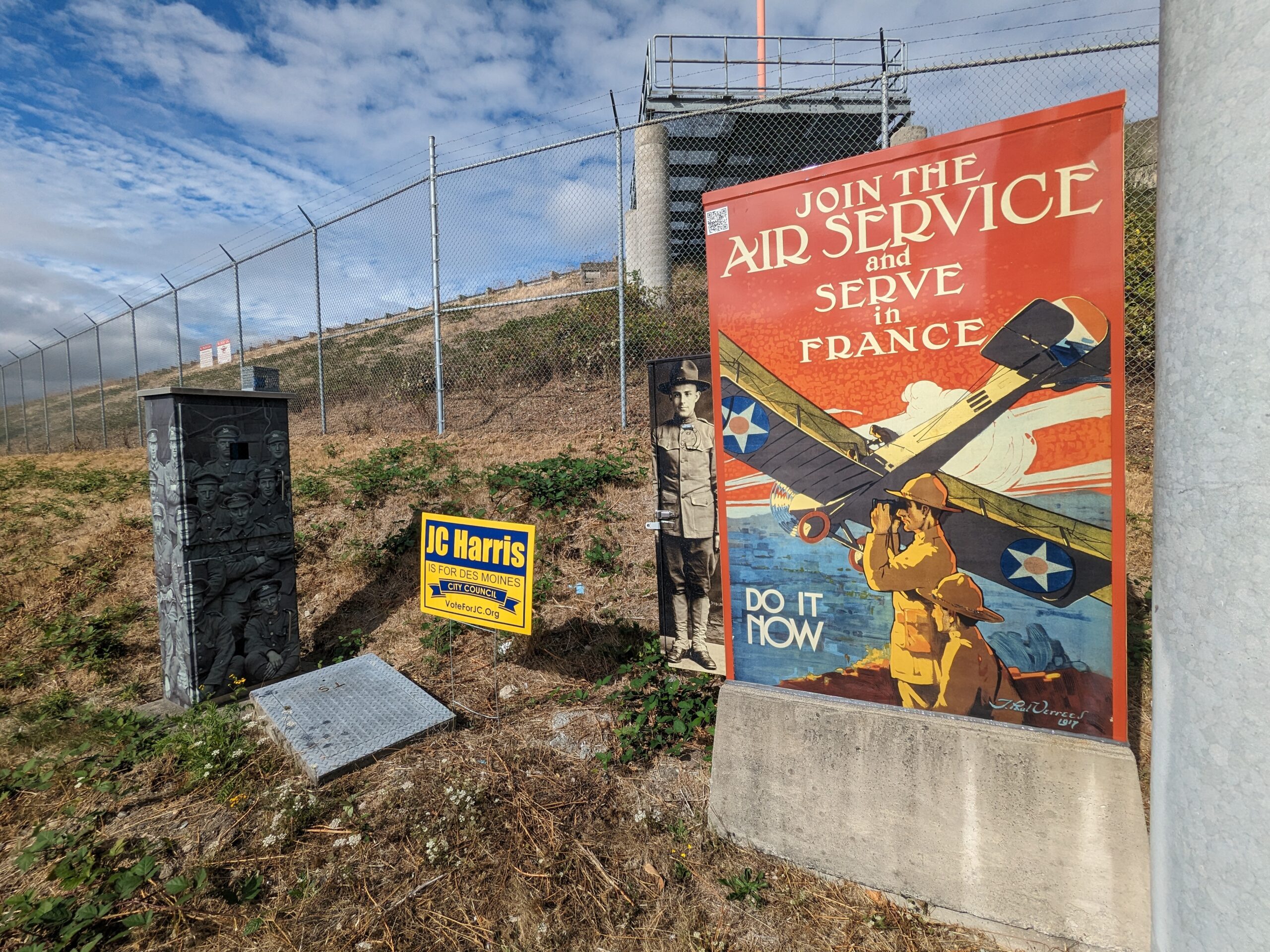
[1:16:52] HARRY STEINMETZ: Charlene is going to talk about the arts walk, which is coming up in less than two months. [1:16:59] CHARLENE BALCAZO: International Sculpture Day, April 25th. There’s a save-the-date in the Currents. The next Currents will be out before the concert starts. I’m making real progress on the map — it should be available probably by our March meeting. [1:17:32] GENE ACHZIGER: I’m going to ask for money a year in advance because I don’t want you to spend it all. Does the city have a grant writer on staff? One thought I had was a mural on the south side of the CenturyLink building on 223rd — a huge blank wall. Jimi Hendrix on the west side so you can see him near the theater. And the Spanish Castle. Desmond — he’s the gentleman who does a lot of the work in West Seattle, you’ll see him on utility boxes and all over — he’s extremely talented. Maybe because these things are probably mostly sponsor-funded, we could look into grants. There have got to be grants for something like that, and people would really like it. [1:19:11] UNIDENTIFIED: May I comment on that? That building — it’s Chase Bank and then the phone company building. What I think they even had Pacific Northwest Bell on it not that long ago. That is a good location, and murals are good. We’re trying to pursue murals in other locations around town as well. The Spanish Castle makes sense — it was in our neighborhood. But Jimi Hendrix — he’s from Renton. [1:19:49] GENE ACHZIGER: He started at the Spanish Castle. [1:19:56] UNIDENTIFIED: He came down from Renton. One of his songs has “Spanish Castle” in it. And one of his songs talks about a car that would never make it — that’s why he was always late. He would sit outside the back and listen to all of the bands, and it kind of helped shape him. At one point someone didn’t show up and they brought him in, and it kind of started there. I like the diversity aspect too. [1:20:33] VICTORIA ANDREWS: Actually, what happened is that he was not allowed to play because he was Black. But one of the groups that was playing had their amplifiers fail. He had his amplifiers with him. They had to let him play. [1:20:56] UNIDENTIFIED: The mural idea made me think of something I asked Traci Buxton maybe two or three years ago — couldn’t we have the arts commission hire artists to paint murals on the fencing in front of some of our empty lots? Just a portion of them, to make downtown a little more attractive. [1:21:26] ALYSON CHAPIN: What’s the Spanish Castle? [1:21:32] UNIDENTIFIED: It was a dance hall where the Walgreens is now. There’s actually a very good documentary about it. [1:21:45] ALYSON CHAPIN: I was envisioning an actual castle! [1:21:57] ROBYN DESIMONE: I’m going to be the negative Nelly again. Murals are fantastic. But murals need permission to be put on private property. [1:22:10] UNIDENTIFIED: There is a setback that the city owns, so the fencing would be on the setback. [1:22:22] ROBYN DESIMONE: Details could be worked out. You do need permission before you do stuff. [1:22:35] UNIDENTIFIED: It’s called graffiti if you don’t. [1:22:41] JEFF CROMPE: A similar idea I brought up to Tracy and maybe Matt Mahoney a few years ago — all the empty storefronts along Marine View Drive. If we could have something in the windows that looks more attractive than a ghost town. And the utility wraps here — originally that was under the arts commission, but it’s such a huge expense that Katherine kindly took it off our budget. They’re supposed to be replaced every 5 years and none of them have been replaced for a while. There are about 40 of them and they can cost up to $2,000 apiece. So we could be looking at $40,000 to $50,000 at any one time to upgrade our utility wraps. Just something to consider. [1:23:52] BILL LINSCOTT: Driving through Rainier Valley, we came across a vacant lot where they had put these large images — probably seven feet high — of people and kids, made out of wood. Stationary statues. Baseballs, kids playing. It changed that whole open field into a playground. When you went by, you just saw excitement out there. I told you I’m going to go find that, take some pictures, and bring them to you — it was a really clever idea. We have some spots around town. Put two or three in and I think you could get the wood shop up at Wesley Homes to produce whatever you wanted. They would.—
[1:24:53] HARRY STEINMETZ: Senior services. [1:25:00] CORRINE ANDERSON KETCHMARK: I was absent at the last CAB meeting, so I looked over the notes and put together some info I thought we were hitting on. Feel free to discuss now or send me an email, because we’ll also have the assistant city manager and Kyle joining at some point. I was set to meet with Courtney to come to our senior services meeting and discuss some programs, but it didn’t work out, so we’re going to meet next week with Kyle and then I’ll bring everything back the following week.There are three main ideas. First: intergenerational programming. There’s a program right now called Indoor Toy — it’s a parks department program at the fieldhouse for kids from crawling age to five, a couple of days a week. Moms get away and let the kids run. Seniors could be involved with that, just to be engaged with another age group.
We talked a lot at the CAB meeting I missed about the schools and all the different engagement opportunities. The second idea: a history project — “senior versus senior.” A high school senior goes to Hudson House or Jetsons Park to meet with a senior citizen. Could be a 60-year age gap. Maybe it ties into the history curriculum at the high school, and the students go in and conduct an interview. It makes the senior feel valued, and I would want it geared toward residents who have been here in De Moines — because we’re losing history as that age group passes.
The third idea: I came up with the name “Postscripts” — like PS, Postscripts. Like, the new fishing pier comes in and someone who remembers what used to be there says, “Yeah, I remember there was a little house down there, and a Quartermaster store.” Stories from a senior’s point of view. The event would be something like a hall — or even the theater, the small upper space they used a couple months ago — where seniors have tables and bring their memorabilia, and people walk through and talk with them. It would be great to do it around the Waterland Parade so people could go look at it before the parade, then come right down the stairs to the historical society. These seniors — I feel like we’re losing the story if we’re not tapped into that. I’ll meet with Courtney next week and let you know where it goes.
—
[1:29:51] HARRY STEINMETZ: Human services. [1:29:58] DIANE HOYER: We actually met today at the police department with Monica — she is the co-responder staff person. Tara and Alex set it up. She presented what she does. Chief Bo was there and sat through the whole thing. She’s well worth meeting. She knows what’s really going on at ground level. We learned about the services she provides, the kinds of experiences she has, and how she helps people get connected to services. She provided us with some brochures, which are very helpful because we want to build a resource guide. Thank you, Tara, for helping set that up.We have another meeting set up about food services — we want to meet with the Backpack program and Orion. And there’s a presentation at Highline that some of us signed up for. We’re staying busy. We also learned from Alex today that ShareOne app is going to release the grant applications on March 6th, so thereafter we’ll be going through those and making recommendations to council about which should be funded. Human services oversees the applications for funding for service providers in the community for social services. We make our recommendations — we’re advisory — but we learn as much as we can about the different services within De Moines and the surrounding areas.
—
[1:32:58] HARRY STEINMETZ: Anything for the good of the order? [1:33:05] UNIDENTIFIED (city staff): We wanted to let you know we’re proposing some code cleanup. Now that we’ve added two new committees — the airport committee and the planning commission — as well as the restructure of the CAB, we just need to do some cleanup of the code to make sure everything is consistent. We’ll be presenting that to council next Thursday if you care to watch, but otherwise we’ll provide updates about anything that might change. [1:33:34] UNIDENTIFIED: What kind of code? [1:33:34] UNIDENTIFIED (city staff): We have a general code that applies to all appointed committees. This is an appointed committee — a committee made by council of people who aren’t council members. We have quite a few appointed committees and we just added two more. So we need to go through, clean things up, and make things consistent. [1:33:54] HARRY STEINMETZ: Thank you. Before we adjourn, I want to recognize two members who are leaving us for the planning commission — Colleen Gantz and Barton DeLacy. You are wonderful members and you will be missed. They’re lucky to have you.The Woodmont and Zenith at-large seats will open up as well. If you know anybody, let them know. We’d also like to replace Colleen on senior services.
[1:35:24] COLLEEN GANTZ: I’ve been wanting to be on the planning commission for a while — that’s partly why I wasn’t on another committee, and I focused on the strategic plan instead. Thanks for your grace on my stepping away. Just sitting here today, I’m really going to miss this group. Susan White and I had coffee last week and she said, “This group is very effective,” and I couldn’t agree more. You have a lot of influence in the community. Thanks for letting me be part of it. [1:36:09] ALYSON CHAPIN: If senior services is restructuring to be more intergenerational and the name is changing, I’d like to talk to you about being involved. [1:36:21] HARRY STEINMETZ: Charlene, I would entertain your motion. [1:36:29] CHARLENE BALCAZO: I just ran out of water. [1:36:41] HARRY STEINMETZ: I want the at-large members who haven’t requested to be on a committee to know that they can always join a committee. With that — is there a motion to adjourn? [1:36:55] UNIDENTIFIED: I so move. [1:36:58] UNIDENTIFIED: Second. [1:37:00] HARRY STEINMETZ: Anybody opposed? Hearing none, we are adjourned. Thank you all very much.1This is a machine-generated transcript generated on the fly by Google/Youtube/AI. Accuracy totally not guaranteed. Provided only as a convenience and to help people with disabilities. Caveat lector!