



By Neetish Basnet – Reporter, Puget Sound Business Journal
Oct 16, 2026
Listen to this article10 min
Story Highlights
What’s This?
- Seattle-area apartment owners face $579.5 million in maturing private-label loans by 2029.
- CEP Multifamily bought distressed properties and entered a joint venture to refinance debt.
- Multifamily sales in the Puget Sound region have dropped significantly in 2026.
Josh Jansen can talk numbers. The CEO of Everett-based CEP Multifamily has dealt in square footage, rents and occupancy rates his entire career. More and more, however, his conversations involve capital stacks, loans and maturing debt.
“We’re real estate guys. We’re not Wall Street financial engineers,” he says. “We’re guys that know how to roll up our sleeves and run a property.”
Financing a property has become a lot more expensive as the Federal Reserve’s interest rate hikes have driven borrowing costs far above the historic lows of just a few years ago.
Today, the challenge for many apartment owners is filling funding gaps, not vacant units.
In the Seattle area, 36% of the $579.5 million private-label loan obligations backed by apartment properties are set to expire by the end of 2026, according to data from real estate analytics firm CRED IQ. About $336 million of those loans are maturing by the end of 2029.
Amid the broader debt overhang, Jansen has been crunching numbers and negotiating deals.
CEP, which owns roughly 1,600 apartment units, bought two distressed properties last year. Earlier this year, the company entered into a joint venture with a global investment firm to recapitalize debt on a Monroe apartment complex — a move it had never made in its 25-year history.
“People assumed that interest rates maybe would go down to three or four. Now, they’re in the mid-sixes, sevens. It’s like a 2x increase in interest rate. I think it was Warren Buffett who said, ‘When the tide goes out, we all get to see who’s been swimming naked,’” Jansen says. “We’re starting to see who’s been swimming naked.”
In a seemingly strong apartment market, where vacancies are low and rents are high, property sales have ebbed. For now, Seattle-area property owners are buying time through alternative financing options as restructuring loans and selling at favorable valuations have become difficult.
“There’s definitely distress,” Jansen says. “It’s overstated. But it’s there for sure.”
 expand
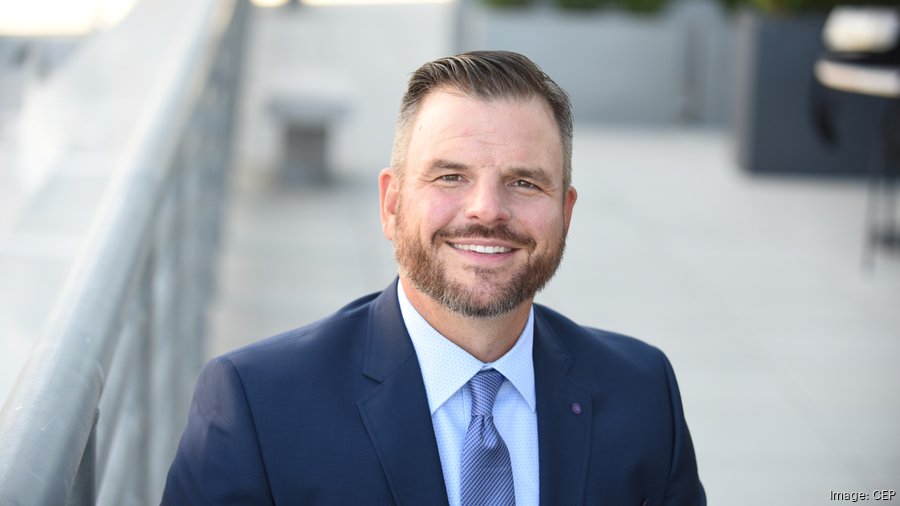
Josh Jansen is the CEO of CEP Multifamily.
CEP
Financing in a ‘weird market’
Seattle’s apartment market is relatively healthy but “hunting around, trying to find equilibrium,” says Dylan Simon, executive vice president at Kidder Mathews.
The regional vacancy rate fell from 7.4% in the third quarter of 2025 to 6.7% in the third quarter of 2026, according to a report by Kidder Mathews’ Simon Anderson Multifamily Investment Team. Average rents are up from $1,995 to $2,027 over the same period.
“Interest rates are rising faster than properties’ incomes are,” Simon says. “If you own an office building and it’s 40% or 50% vacant, you’re distressed. Most apartment buildings are full. Maybe they’re not collecting as much rent as they want. But they’re still full. So, there’s really not that much distress because you can just keep lowering the rent a little bit till you find a tenant.”
The distress rate for commercial mortgage-backed securities tied to Seattle-area apartment properties stood at 3.9% in August. That was less than half the national rate of 8.8% for delinquent loans or loans in special service for multifamily properties.
Two apartment properties accounted for all of the Seattle area’s $25.7 million in distress balance.
An $18.2 million CMBS loan collateralized by the Sorento Flats apartment building in Seattle’s Capitol Hill neighborhood has been in special servicing since 2023. In Lakewood, a $7.5 million CMBS loan on the 73-unit Sandman Apartments, which is facing occupancy challenges, is more than 30 days delinquent.
Across the Seattle area, troubled multifamily loans accounted for less than 2% of the overall $1.43 billion in CMBS distress. Seattle-area commercial landlords – including multifamily, office and industrial – face a bill of $9.98 billion in debt over the next decade.
Multifamily distress has been limited compared with the turmoil in the office sector. The Seattle office market is saddled with one of the highest vacancy rates in the country, and downtown office towers have lost billions in valuations since 2022.
But the higher-for-longer interest rate environment has made refinancing loans unpalatable and kept many potential apartment buyers away.
“Weird market,” said Tyler Smith, a senior vice president at Northmarq’s Seattle office who specializes in private capital multifamily sales. “It’s probably the strangest market I’ve been involved in.”
Developers delivered about 135,000 new apartment units in the region between 2014 and 2025, averaging 11,155 units per year. So far this year, there have been just 3,447 units completed.
Limited new supply would tighten the apartment market, support occupancy and drive up rents as the region’s population continues to grow.
Between 2020 and 2026, the combined population of King, Kitsap, Pierce and Snohomish counties climbed 6.3% to 4.56 million. The Puget Sound Regional Council forecasts the population will exceed 5.8 million by 2050.
High-wage tech workers, especially those tied to the artificial intelligence sector, are the most sought-after segment of that growing population for apartment owners.
“Very few other markets have the type of talent that these larger companies, these unicorns, need,” Simon says. “When you’re a Google or a Facebook or an Apple, in a city like San Francisco, the competition is so high that you can’t afford the talent, or the talent can’t afford to live there. They still need to attract talent. They need to go to a market that has talent, which is us.”
A prolonged exit strategy
Solid operational fundamentals have not eliminated the mounting financial stress facing apartment owners.
Time is running out for many landlords whose loans are set to expire soon. Their options are few. They can put down the equity to clear the balance, bring in a partner, refinance on less favorable terms or exit the investment altogether.
Buyers have the upper hand in the current market, so most apartment owners are hoping to negotiate an extension on their loan terms or refinance with the existing lenders. On average, the transaction cost on a new loan equates to about 3% of the loan balance. The cost includes origination fees, legal fees and closingcosts.
Higher interest rates and capitalization rates have made conventional lending more challenging. And while occupancy and rents have held up, Seattle-area apartment properties have seen valuations slip roughly 5% over the past year as higher borrowing costs tempered some investor demand.
“The market here has differed from some of the other markets where it’s way more speculative,” Smith says. “We’ve seen pockets of distressed deals. But the pain has really been for developers and investors fighting to get some of their capital back. Maybe they’re taking a loss on the original investment but not necessarily below the debt.”
Debt funds, private credit firms and alternative lenders are stepping in to bridge the refinancing shortfalls.
Security Properties took an $82.5 million refinance loan for the 352-unit Olin Fields apartment complex in Everett in June. Mesa West Capital, the Los Angeles-based subsidiary of Morgan Stanley, provided the new loan to replace a prior MetLife commercial mortgage that originated in 2022.
In Seattle, Mesa West Capital provided Rise Properties Trust with a $92.5 million loan last year to refinance two mid-rise apartment buildings in Belltown and Capitol Hill.
Lenders are ready to facilitate investments on the right properties, says Josh Westerberg, director and head of Mesa West Capital’s originations team at the San Francisco office.
Finding new partners with fresh capital can allow apartment owners to essentially buy time until market conditions favor sellers.
“That is the reason you’re seeing fewer sales,” Westerberg says.
The Puget Sound region’s multifamily market is on pace for one of its slowest years in decades. The market has recorded $1.2 billion in multifamily sales across 108 transactions in the first half of this year, according to data from Kidder Mathews. Last year, there were 304 sales that totaled $6 billion.
Industry experts are anticipating an increase in refinancing, recapitalization and joint-venture deals where owners sell a portion of their apartment properties rather than entire properties.
“A lot of groups are deciding between two not great decisions,” Smith says. “You are seeing what we call ‘forced sellers.’ It doesn’t mean they’re in distress, but they have a decision that is being dictated by the debt.”
Jansen at CEP is closely monitoring the company’s portfolio, which intends to expand.
CEP holds more than $500 million in assets. Its investment group is made up of hundreds of local high net-worth family offices and investors. The infusion of fresh capital from their joint venture partner adds to its capacity, Jansen says.
“The best way for us to expand our footprint to meet those needs of our investors is to find new capital partners that enable us to go to new markets and buy larger assets,” he says.
Jansen plans to make opportunistic buys in other West Coast markets next year. Some creative financial maneuvering, as he has learned, can go a long way.
“Most of the allocators that typically make these investments, they’re a little bit worried about where the market’s at,” Jansen said. “The real art here is finding the capital that aligns with strategy. We’re ready to do a market deal when we’re able to find a capital partner that’s willing to go along for the ride with us.”
For more stories like this one, sign up for the Business Journal’s free morning and afternoon daily newsletters or download our free app.