
Forterra, a Seattle nonprofit that began in 1989, rose to national prominence with its innovative approach to conservation. Then, an ambitious endeavor nearly toppled it.
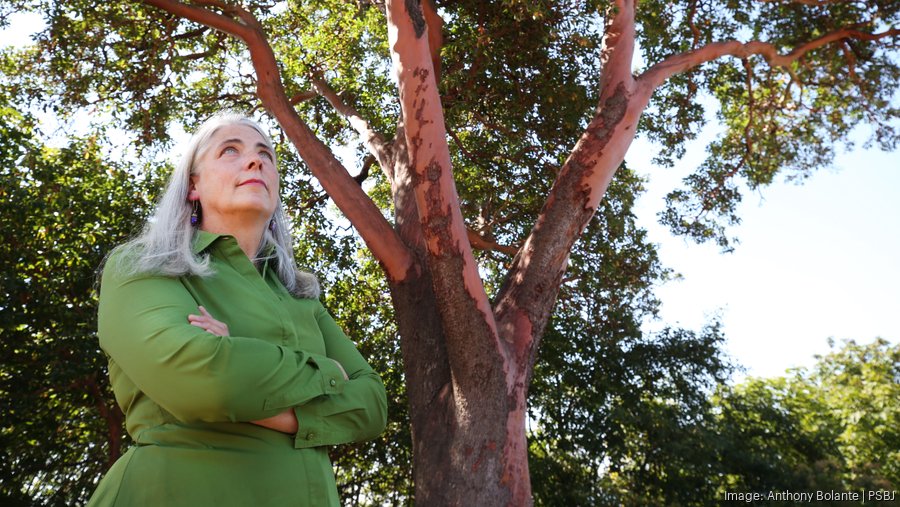
Forterra CEO Michelle Connor says the nonprofit is moving forward in a “thoughtful way” after a controversy forced it to scale back.
Anthony Bolante | PSBJ

By Marc Stiles – Senior Reporter, Puget Sound Business Journal
Oct 31, 2025
Story Highlights
What’s This?
- Forterra CEO Michelle Connor describes an organization that was overextended and unable to deliver on ambitious plans.
- The Snoqualmie Indian Tribe withdrew support for Forterra’s federal grant in 2021.
- Forterra’s staff decreased from 65 to 23 amid organizational challenges.
About this series: For years, Forterra had garnered high-powered support for its innovative approach to land preservation before a string of controversies forced the Seattle-based nonprofit to scale back. This story is part of a yearlong reporting project on the rise and fall of Forterra.
“I didn’t sleep. I was scared. People were hurt. There was only so much I could do to fix that.”
Michelle Connor’s voice broke as she spoke. Sitting in a Ballard coworking space on an unseasonably warm January day, the embattled nonprofit CEO had already survived calls for her job amid a string of controversies.
At its height, Forterra was a multimillion-dollar nonprofit with a staff of more than 65 employees and a national reputation for its innovative approach to preserving Pacific Northwest lands.
Forterra’s agenda expanded as it attracted big-name investors such as venture capitalists Nick Hanauer and the late Tom Alberg and garnered backing from the Russell Family Foundation, BECU and the Master Builders Association of King and Snohomish Counties.
 expand
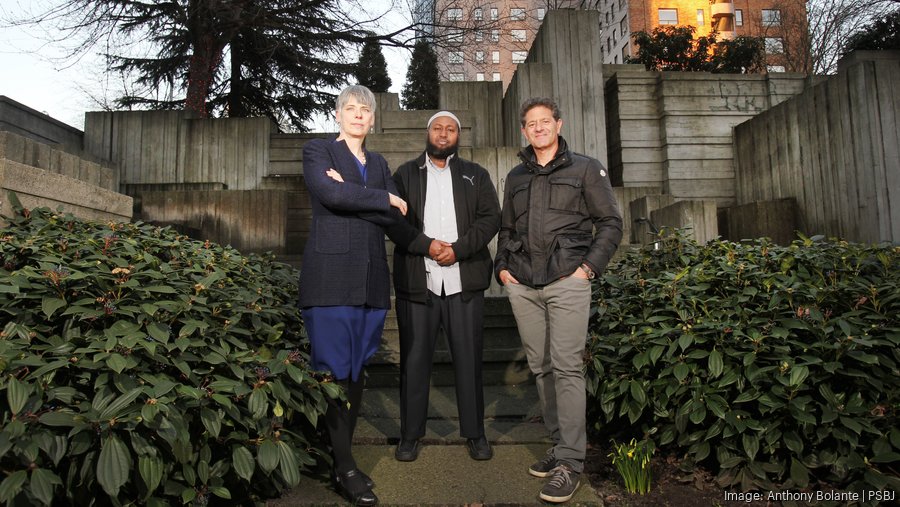
(Left to right) Forterra President and CEO Michelle Connor, Abu Bakr Isalmic Center Executive Director Abdirisak Ahmed, and venture capitalist Nick Hanauer are shown in 2018, after Forterra acquired a Tukwila motel property across near the center. Abu Bakr subsequently bought the property and is planning a mixed-use project with affordable housing.
Anthony Bolante | PSBJ
Last decade, the mission expanded to include working with underrepresented urban and suburban communities in areas ripe for gentrification. At the urging of Alberg, Hanauer and others, the nonprofit launched a social impact vehicle called the Strong Communities Fund to promote homeownership as a means of stanching displacement in BIPOC neighborhoods. The effort raised nearly $29 million over two rounds.
The money was earmarked to buy and hold development sites in gentrifying areas until nonprofit community partners could raise funds to buy and develop them on their own.
Returns would be modest but secondary to the mission. It ultimately succeeded with the last of the deals closing in August.
However, the scope of Forterra’s aspirations took a toll on the nonprofit and affected other groups. Its staff has dwindled to 23, and some project partners and investors are no longer willing to talk about the social impact fund.
With the second Strong Communities Fund winding down, Forterra is notably different, chastened by its mistakes that began with earnest intentions.
“We felt bold and confident that we could pull it off — and that was hubris,” Connor told the Business Journal.
A groundswell of support
Maggie Walker, a Seattle civic leader and philanthropist, was among the investors in Strong Communities and believed in Forterra’s mission.
“A group of us felt like Forterra had a skill set that was not being used in urban areas,” she said in an interview this spring.
The plan called for a Forterra offshoot to develop the $73 million Darrington Wood Innovation Center in the Cascade foothills. There, cross-laminated timber (CLT) panels would be made for building Strong Communities projects.
Walker and others had encouraged Forterra to push the envelope and create generational wealth-building opportunities through homeownership.
“Social impact investing is almost like research and development,” she said. “You can’t do it without significant capital.”
 expand
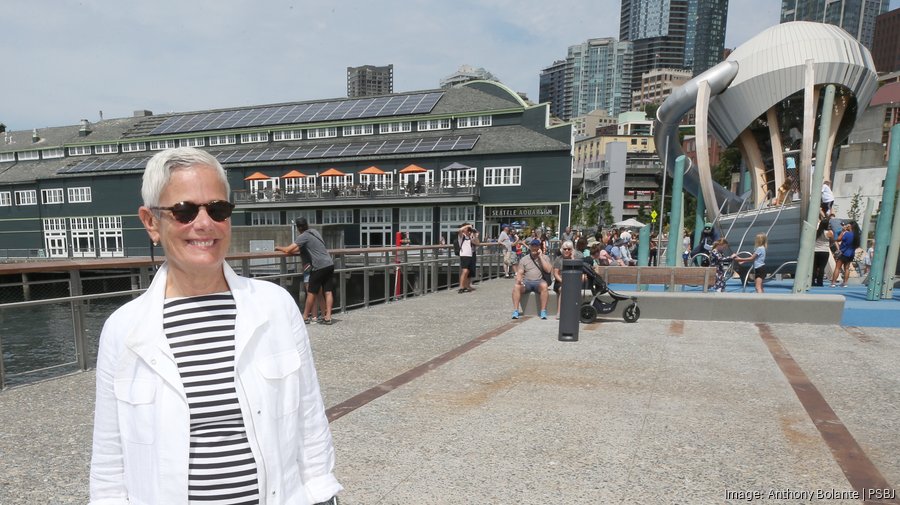
Maggie Walker is the founding board chair of Friends of Waterfront Seattle.
Anthony Bolante | PSBJ
Their vision was coming into focus in 2017, a year before Connor took over as president and CEO.
Forerra, a private real estate company and community activists announced a pioneering deal that resulted in Central District community members gaining an ownership stake in a prime property in Seattle’s rapidly gentrifying historically Black neighborhood.
The deal turbo-charged the nonprofit as it set out to replicate the success on a regional scale. It marked a new chapter for Forterra, which had gained national attention for successfully bringing together developers and elected officials to preserve open space through complex property acquisitions.
In 2020, it was one of six $2.5 million grant winners of the Housing Affordability Breakthrough Challenge sponsored by Enterprise Community Partners and Wells Fargo.
Forterra was going to reengineer the affordable housing supply chain by creating carbon-sequestering modular housing units made of CLT from small-diameter trees harvested from the Snoqualmie Indian Tribe’s nearby ancestral forest.
To show how it could work, the nonprofit brought craftsmen from Switzerland to Everett to build the first modular prototypes, which Forterra took on a road show to Tacoma to promote a 300-unit mixed-use Hilltop development.
 expand
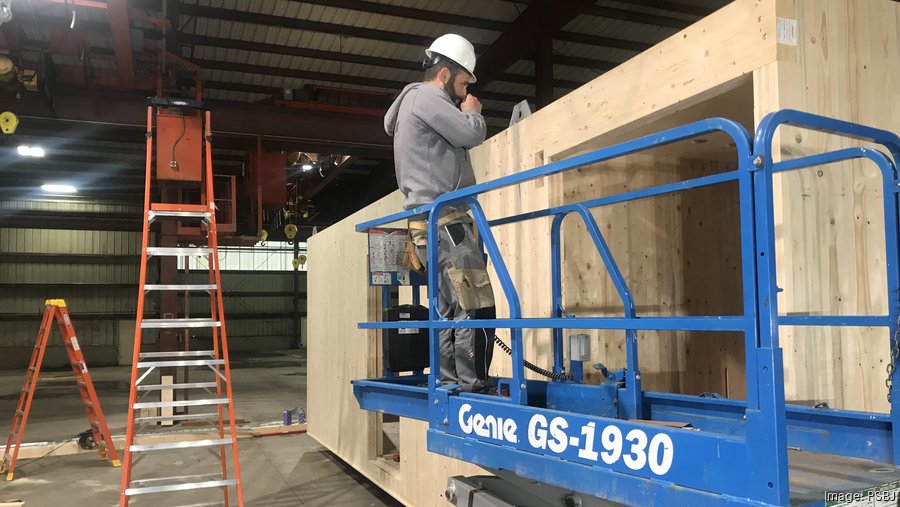
This craftsman from Swiss-based Zaugg AG Rohrbach and three colleagues started building the first ModPros in November 2021 at the Port of Everett.
Marc Stiles | PSBJ
Forest to Home, which Connor launched in 2019, was backed by the second Strong Communities Fund and federal grant money. Its plan to develop the Darrington CLT plant would bring about 150 jobs to the small timber town.
Strong Communities Funds
- Strong Communities Fund 1: 30 investors raised $10.2 million
- Fund 1 projects: Tukwila, half of Hilltop and two others in South Seattle’s Rainier Beach and Central District neighborhoods
- Strong Communities Fund 2: 11 investors raised $18.5 million
- Fund 2 projects: Darrington Wood Innovation Center and the other half of Hilltop
This came on the heels of Katerra, a $2 billion SoftBank-backed construction tech company that had sought to revolutionize the technologically moribund building industry through mass production of modular units. Katerra’s moonshot ended in bankruptcy in 2021.
But Forterra had been on a roll for years, and Connor envisioned scaling the concept nationwide.
On Sept. 19, 2022, Forterra heralded the news of Forest to Home’s selection as one of 70 projects in the USDA’s Partnerships for Climate Smart Commodities program. The grant was worth up to $20 million.
Four days later, Forest to Home was embroiled in a scandal that would upend Forterra.
Grant application sparks controversy
In a Sept. 23 letter, the Snoqualmie Indian Tribe pulled its support of the Climate Smart Commodities grant, saying Forterra “knowingly made material misrepresentations of fact” in the grant application, and “broadly misled” the tribe about the application’s content, including unrealistic plans to harvest timber.
Forest to Home, already stretched thin behind the scenes, stood exposed. A review by an independent counsel had found that while Forterra did not demonstrate sufficient respect for the tribe’s status as a sovereign government, it pursued the funds in “good faith” and that “any missteps and misstatements do not appear to have resulted from any malicious or deceptive intent.”
On Nov. 3, Forterra issued an “unequivocal apology” to the Snoqualmie Indian Tribe. The investigation by Angeli Law Group of Portland proved many of the tribe’s claims, including that Forterra failed to inform the tribe about commitments to specific BIPOC communities.
According to the grant application, in the initial pilot phase, 12,000 acres of Snoqualmie Indian Tribe land would be harvested to build up to 1,000 affordable homes. Later, the pilot would be expanded to include an additional 100,000 acres harvested from industrial timberland.
This placed “improper pressure on the Tribe as the primary source of fiber for specific housing units,” states the investigators’ report, which indicated Forterra was moving fast and cutting corners. It did not, for instance, get the tribe’s consent to list in the application matching tribal funds $1.5 million.
“This third-party report proves our Tribe’s claims, however, Forterra’s apology do(es) not go far enough, and only comes after this third-party has confirmed the Tribe’s statements,” tribal Chairman Robert M. de los Angeles said in a Nov. 3 news release.
 expand
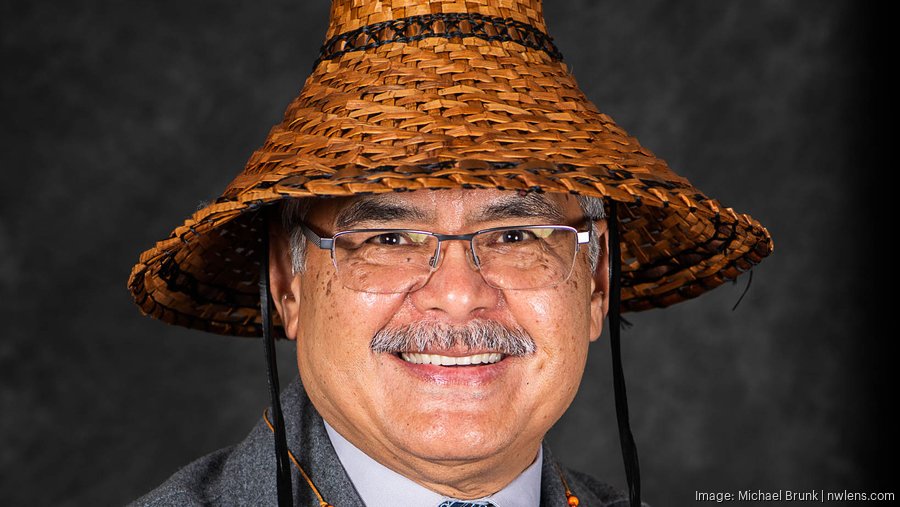
Robert de los Angeles is chairman of the Snoqualmie Tribal Council.
Michael Brunk | nwlens.com
The tribe said Forterra leaders accused it of acting in bad faith. It posted a link to leaked audio from internal all-staff meetings, when Forterra leaders said they were “extremely pissed” and “angry” at the tribe.
“We are moving quickly and we are trying to do really big things and to some degree are shaking things up,” Beth Birnbaum, Forterra board chair at the time, said during the Oct. 1, 2022, all-staff meeting. “That can have ripples that refract back to us and make it a lot harder to do the work you all are doing that is so important. I think we are in one of those moments now.”
The tribe did not respond to the Business Journal’s requests for comment for this story.
The controversy was compounded when JP Morgan Chase pulled a $3 million grant earmarked for a Forterra project in Tacoma.
“They said, ‘We don’t want to be around this,'” Connor recalled.
Forterra acknowledged it fell short on multiple measures, including providing only generalized statements about the timber expected to be harvested. It admitted the grant failed to note the timber would come from multiple sources, “while the grant made harvesting from the tribe’s ancestral forest the dominant narrative.”
“When you’re working in an environment where the whole structure has led people to be engaged with you has been unjust, then when you don’t succeed, you’re the representation of all of that,” Connor said in January. “That’s the reality, and you can’t fault them.”
Even before the controversy, Connor realized executing on the Forest to Home initiative would be a stretch. The USDA had guaranteed financing, but it became apparent Forterra couldn’t afford to carry the interest. Then the cost of the mass-timber equipment from Europe for the Darrington Wood Innovation Center skyrocketed, sending the project’s estimated cost to $115 million in spring 2022.
“We were chasing it, trying to fix it. It felt like whack-a-mole. It was like, ‘Oh, we got this fixed,’ and then there’d be a new cost problem,” Connor said.
Word of the Snoqualmie Tribe’s anger spread as the Yakama and Quinault Indian tribes, two members of Congress, the mayor and City Council of Tacoma, Darrington officials and other project partners were copied on the letter that Snoqualmie Tribal Chairman de los Angeles sent to Under Secretary of Agriculture Robert Bonnie, rescinding the tribe’s support for the grant.
De los Angeles wrote that Forterra even refused to provide a copy of the grant application unless the tribe signed a non-disclosure agreement.
It was “an unprecedented ask of a so-called partner,” the chairman wrote, adding that when the tribe did get a copy, its “worst fears were realized.” The tribe believed that Forterra “knowingly made material misrepresentations of fact,” and it was “broadly misled about the content of the grant application.”
After De los Angeles’ Sept. 23 letter, the progress that Forterra had been building for a decade unraveled, and the conflagration soon grew.
Forterra’s fallout
On Oct. 10, 2022 — Indigenous Peoples Day — 78 former Forterra leaders and employees signed a statement voicing solidarity with the tribe, calling for “a drastic change in direction to preserve Forterra’s valuable legacy and restore its reputation. … It is time for accountability.”
Forterra fired one executive —its vice president of real estate, Tobias Levey — but stood by Connor. Levey declined to comment for this story.
The Business Journal contacted some of the 78 former workers and spoke with two, including Andrew Shifflette, a 15-year employee who attempted to form a union. Shifflette was fired in 2021, and under a National Labor Relations Board settlement, he could have returned to Forterra but did not.
“There’s still the same leadership,” he said in a July interview.
Another employee, who did not want to be named, described the work environment as “very volatile.”
“At one point, quitting became so prevalent that they limited the ability to send all-staff emails because they did not want people to be informed of more terminations or people leaving,” the former employee said.
In January 2021, Forterra employed 65 people, its largest staff. By December 2022, it had about 48.
Connor said there is not much she can do to ease the pain of former employees.
“I see truth in their perspective. People didn’t feel well managed. They didn’t feel that their contributions were taken full advantage of at Forterra,” she said
On Oct. 18, 2022, as the fallout with the Snoqualmie Indian Tribe was unfolding, Forterra received a letter from the Greater Tacoma Community Foundation (GTCF), which had invested in Strong Communities Funds 1 and 2. GTCF said Forterra had peddled false hope of affordable rental and home ownership in the Hilltop neighborhood. The foundation had run out of patience and called for Forterra’s executive team to be replaced.
Then-Forterra Board Chair Birnbaum responded to GTCF CEO Kathi Littmann, saying that the board “has confidence in Forterra’s executive leadership” and was standing behind it.
In an interview last February, Birnbaum told the Business Journal that removing an accomplished longtime leader like Connor at a turbulent time would have been risky. But Birnbaum acknowledged Forterra was overextended.
“That was a mistake and we own that,” she said.
But controversy around Forterra’s Climate Smart Commodities grant application did not prevent the nonprofit’s access to federal aid. A misunderstanding ultimately did.
“We didn’t realize that urban work was completely disqualified from the grant,” Connor said. “You couldn’t tell by the complex grant application.”
After the Snoqualmie Indian Tribe pulled its support for the grant, Forterra secured USDA approval to change the original grant, replacing itself as the primary grantee with the Yakama Nation, which declined to comment on the grant.
With 650,000 acres of forests and a forest products division that mills nearly 88 million board feet a year, pairing the Yakama Nation and the Climate Smart grant seemed like a natural fit.
Earlier this year, the Trump administration rolled back the Climate Smart Commodities program, deeming it a “Biden-era climate slush fund.” The program has been recast as the Advancing Markets for Producers initiative.
“The Partnerships for Climate-Smart Commodities initiative was largely built to advance the green new scam at the benefit of NGOs, not American farmers,” U.S. Secretary of Agriculture Brooke Rollins said in an April news release.
When the preliminary grant was awarded, federal authorities informed Forterra that the proposal would only receive $20 million of the $35.7 million requested. Some aspects of the grant would need to be reworked as well.
It took the USDA about a year to review the Snoqualmie Indian Tribe’s criticisms and to start to move forward with the contract negotiations, and it was then Forterra was informed that federal regulations would not allow the funds to be used for urban construction.
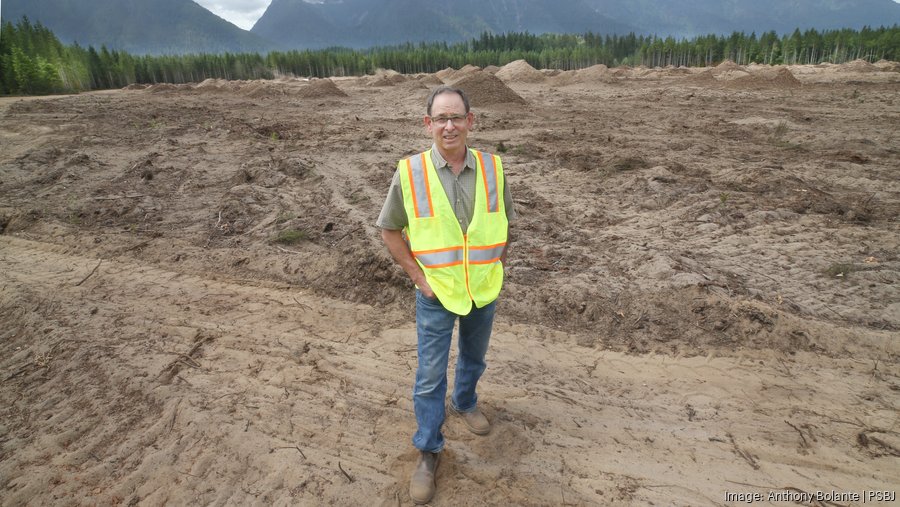
Plans for the Darrington Wood Innovation Center remain, with Mayor Dan Rankin seeking out operators and other partners.
 expand
Darrington Mayor Dan Rankin stands in front of the site where the Wood Innovation Center would be built. Darrington has a population of about 1,450.
Anthony Bolante | PSBJ
Forterra’s path forward
The Forest to Home program is no more, Strong Communities is winding down, and Forterra is a notably changed organization.
Seattle crisis communication expert Josh Chaitin, founder of Tin Can Strategies, says steps such as apologizing to the tribe made sense, but the leaked recording of defensive comments made during an internal Forterra staff meeting did not help.
“I would say certainly their reputation has taken a hit from this, but I don’t think it’s something that would be impossible to recover from,” Chaitin said.
Forterra board Chair Ruth True called Connor’s navigation of the controversies “a beautiful study in resiliency.” She has owned and learned from her mistakes, True told the Business Journal in September.
“Where we are now is such a great space of continuing to do a smaller scale of work we were doing, but still not losing sight of the fact that what Forterra has always been about is innovating new ways for creating good in the community,” True said.
As the controversies simmered, Connor hiked among wind-blown trees at Ebey’s Landing on Whidbey Island, one of her favorite places. Those trees are still standing, she thought, and so is Forterra — with a lot of work to do.
“How do we offer inspiration but in a way that it’s clear it’s aspirational — that it’s a stretch?” Connor said. “That comes down to communication. That comes down to having the discipline to tell people we might not be able to do this.”
 expand
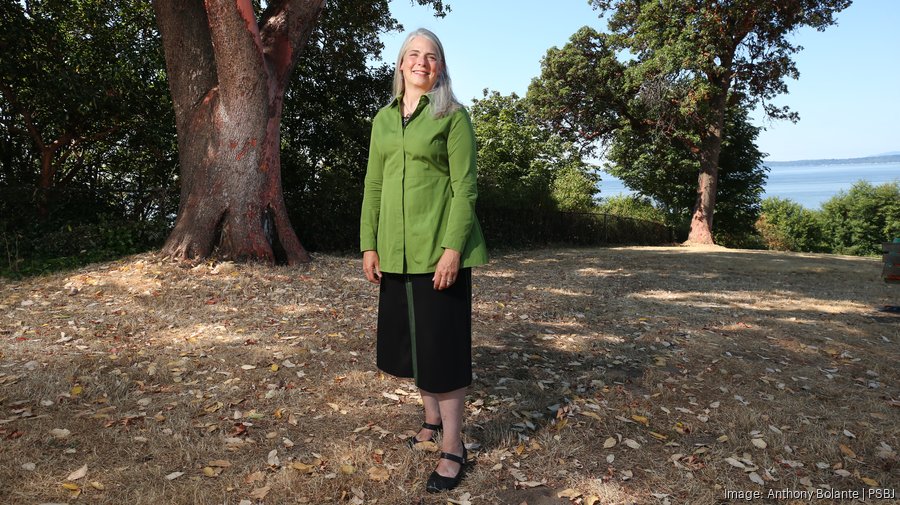
Michelle Connor was named CEO of Forterra in 2018.
Anthony Bolante | PSBJ
Forterra has “invested significantly in management capacity and support” for its employees, Connor said, adding employee satisfaction surveys have shifted from a negative 48 score in 2021 to plus 57 this year.
“They’re choosing to be here, and they’re choosing to be here because they believe that the world’s a better place with Forterra than without Forterra,” she said.
This spring, a Strong Communities site in Tukwila sold to an affiliate of Abubaker Islamic Center of Washington, and earlier in the year, a Hilltop property went to Homestead Community Land Trust.
“To have these various groups carrying the projects forward is an enormous success,” Connor said.
 expand
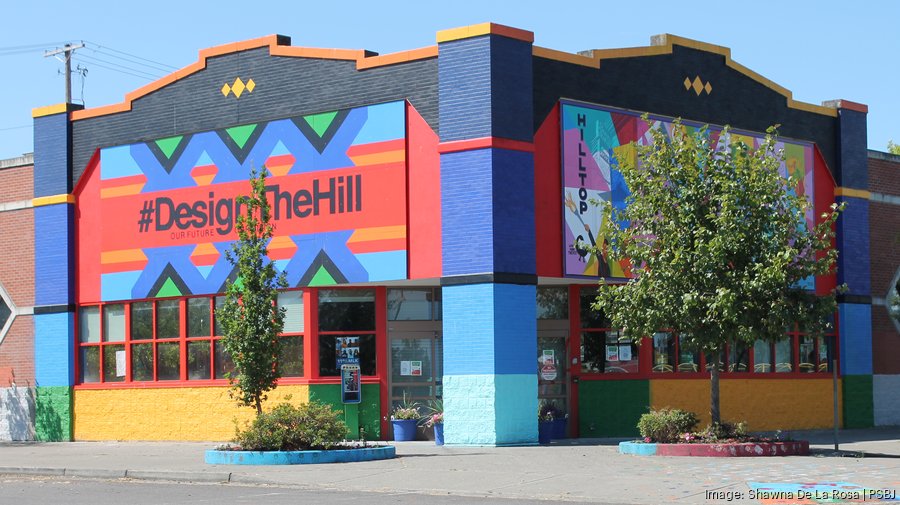
Homestead Community Land Trust acquired the 2-acre former Rite Aid site in Tacoma’s Hilltop neighborhood earlier this year for $4.2 million.
Shawna De La Rosa | PSBJ
Strong Communities investors expected to recoup their capital plus a simple 2% preferred return over the funds’ 10-year terms. But Connor says that won’t happen because the fund lost money by investing in project designs it wasn’t able to fulfill. Instead of maximum prices, they sold at prices that would allow communities to pursue their own projects.
“Fortunately, all investors will receive back a portion of their investment, but the amount of capital returned cannot be determined until all fund activities are concluded,” Connor said.
Today, if an affordable housing developer or community group were to ask Forterra to partner on an acquisition, Forterra wouldn’t buy it on a speculative basis.
“We’re going to buy specifically for what their needs are, and we’re going to have a purchase contract in place, so we’re not trying to solve for a future set of problems,” Connor said.
Forterra is striving to move forward “in a thoughtful way” to “deliver good work on the ground,” she said, adding it’s also obligated to worry about what happens in the Puget Sound region and on both slopes of the Cascade Mountains.
Connor, who was honored in the Business Journal’s Women of Influence program in 2022, remains proud of Strong Communities and Forest to Home. Both programs helped local underserved communities of diverse characteristics get the land they need to own for whatever reason.
“This is not to gloss over what hasn’t worked out,” Connor said. “If we had underpromised, everybody would have looked at this and said these are good outcomes.”
Related Articles
-
Stalled $115M project in Darrington still has a champion
-
Forterra’s once-heralded social impact fund quietly winds down
Forterra’s once-heralded social impact fund quietly winds down
-
Islamic center files plans for former motel site in Tukwila
-
Forterra sells Tukwila motel property to Islamic center
-
Forterra sells Tacoma development site