


THEN: On Oct. 13, 1926, midway through construction of the Doric-colonnaded Capitol Building, its masonry dome peeks through scaffolding. The Olympia dome is one foot shorter than the iron dome atop the U.S. Capitol Building in Washington, D.C. (Paul Dorpat Collection)
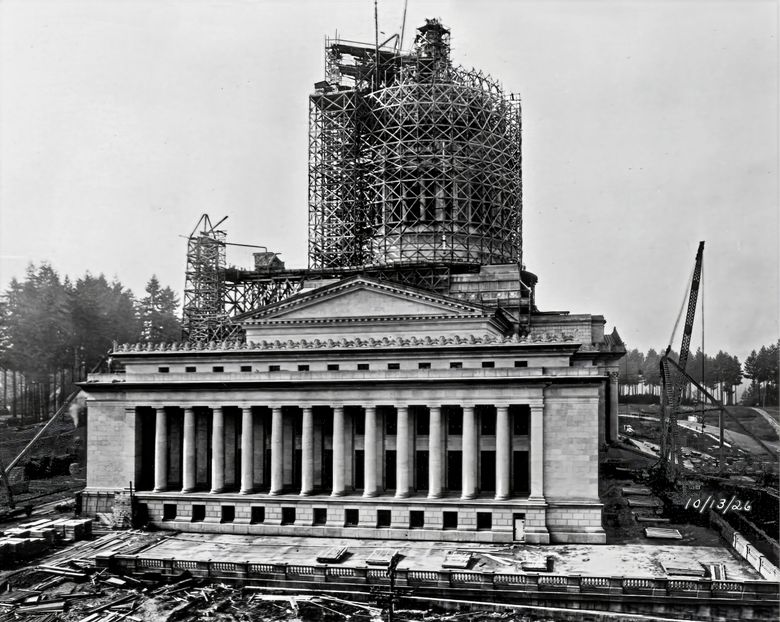
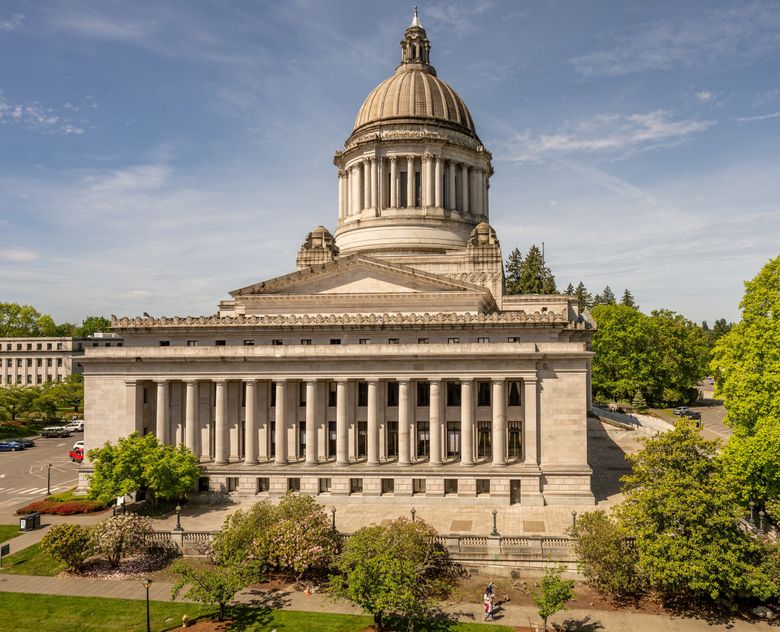
1 of 2 | THEN: On Oct. 13, 1926, midway through construction of the Doric-colonnaded Capitol Building, its masonry dome peeks through scaffolding. The Olympia dome is one foot shorter than the iron dome atop the U.S. Capitol Building in… (Paul Dorpat Collection)More
Special to The Seattle Times
A VISIT TO Olympia, which I highly recommend, is a tonic for what ails us. From the lofty architecture of the Legislative Building (aka the Capitol Building) to the generous, Olmsted Brothers-designed landscape, the sense of uplift is palpable.
As in our nation’s capital, the edifices of government were designed to reflect neoclassical themes of the Enlightenment, plus a shout-out to ancient Greece, the birthplace of democracy.
In an era when, increasingly, questions arise about the legitimacy and efficacy of our democratic republic, these soaring expressions of harmony, proportion and humanism offer enduring comfort.
First, a few pertinent facts:
Our state Capitol building, at 287 feet, is the tallest masonry dome in the United States and among the tallest in the world. The dome itself weighs 30.8 million pounds. The building’s exterior is made of warm-colored Wilkeson sandstone from Pierce County. Built to last, the structure has survived three major earthquakes, most recently the Nisqually earthquake in 2001, followed by three years of seismic upgrades and structural rehabilitation.
THEN: Shown Nov. 18, 1889, during the statehood celebration, this two-story wood-frame structure served first as the territorial, then the state, capitol building between 1856 and 1903. (Courtesy Washington State Historical Society)
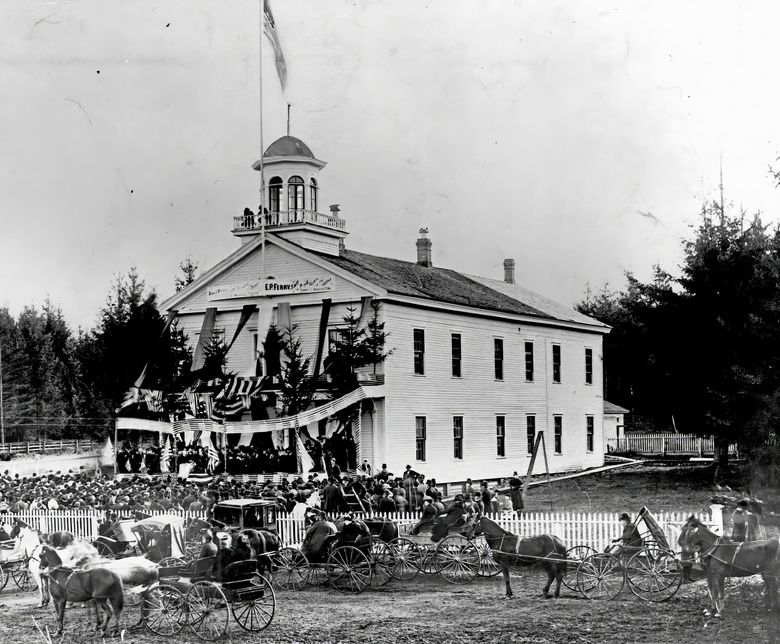
THEN: Shown Nov. 18, 1889, during the statehood celebration, this two-story wood-frame structure served first as the territorial, then the state, capitol building between 1856 and 1903. (Courtesy Washington State Historical Society)
In their authoritative overview, “Temples of Democracy: The State Capitols of the U.S.A.,” architectural historians Henry-Russell Hitchcock and William Seale suggest that in Olympia, “the American renaissance in state capitol building reached its climax.”
The long road to achieving this ideal began when Olympia founder Edmund Sylvester donated a 12-acre bluff as a site for the territorial Capitol. In 1856, the Legislature moved into a two-story wood-frame building on the site, which served first the territory and then the state until 1903.
Early plans for the capitol campus had been shelved following the 1893 financial panic. Gov. John R. Rogers authorized purchase of the Thurston County Courthouse, in whose cramped quarters the Legislature met beginning in 1905.
In 1911, a new State Capitol Commission held a nationwide design competition, enlisting Seattle architect Charles Bebb to serve as lead judge. Out of 30 mostly local submissions, two architects from New York City seized the prize.
NOW: The former courthouse, familiarly called “Old Cap,” overlooks Sylvester Park in downtown Olympia. In the foreground stands a statue of our state’s third governor, John R. Rogers, who arranged for the building’s purchase in 1901 for use as the state Capitol. (Jean Sherrard)
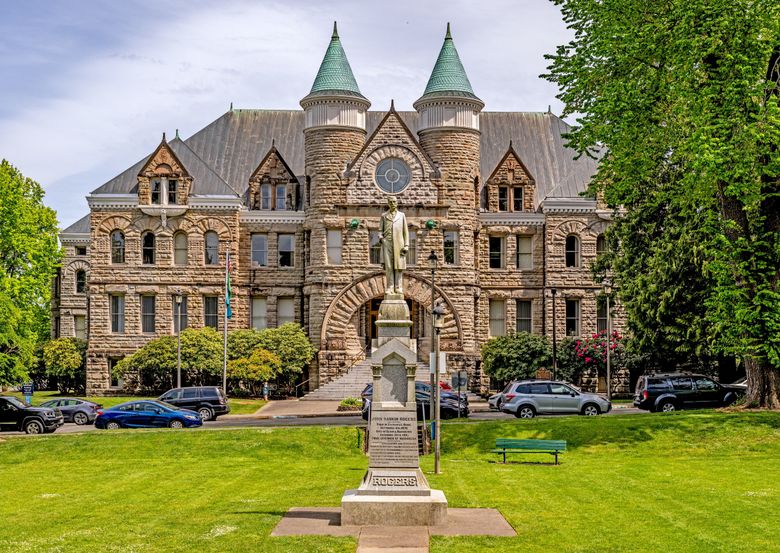
2 of 2 | NOW: The former courthouse, familiarly called “Old Cap,” overlooks Sylvester Park in downtown Olympia. In the foreground stands a statue of our state’s third governor, John R. Rogers, who arranged for the building’s purchase… (Jean Sherrard)More
For Walter Wilder and Harry White, junior architects in their mid-30s, designing the group of capitol buildings was their first and only major commission. Unexpectedly, their work stretched over the next 18 years.
More Now and Then
- Wallingford’s Animal Storm inspires a parade on the wildside
- Lake Sammamish town’s fiery 1925 demise echoes today
- How a bright idea created a Seattle community club
More
When announcing the award, the commission also wired the Olmsted Brothers — the renowned Brookline, Mass., landscape firm already known for its many Washington state contributions — asking if they could “prepare plans for Capitol Building grounds.”
The Olmsted designs were adopted and installed by 1930. Their addition of verdant gardens, trees and wide boulevards completed our state’s graceful, human-scaled homage to nascent democracy in a city quite fittingly named Olympia.
Jean Sherrard is a contributing writer for Now & Then. Check out his and Clay Eals’ blog at pauldorpat.com to learn how to schedule the two for presentations on local history. They share their 360-degree video at the YouTube channel Now & Then 360.